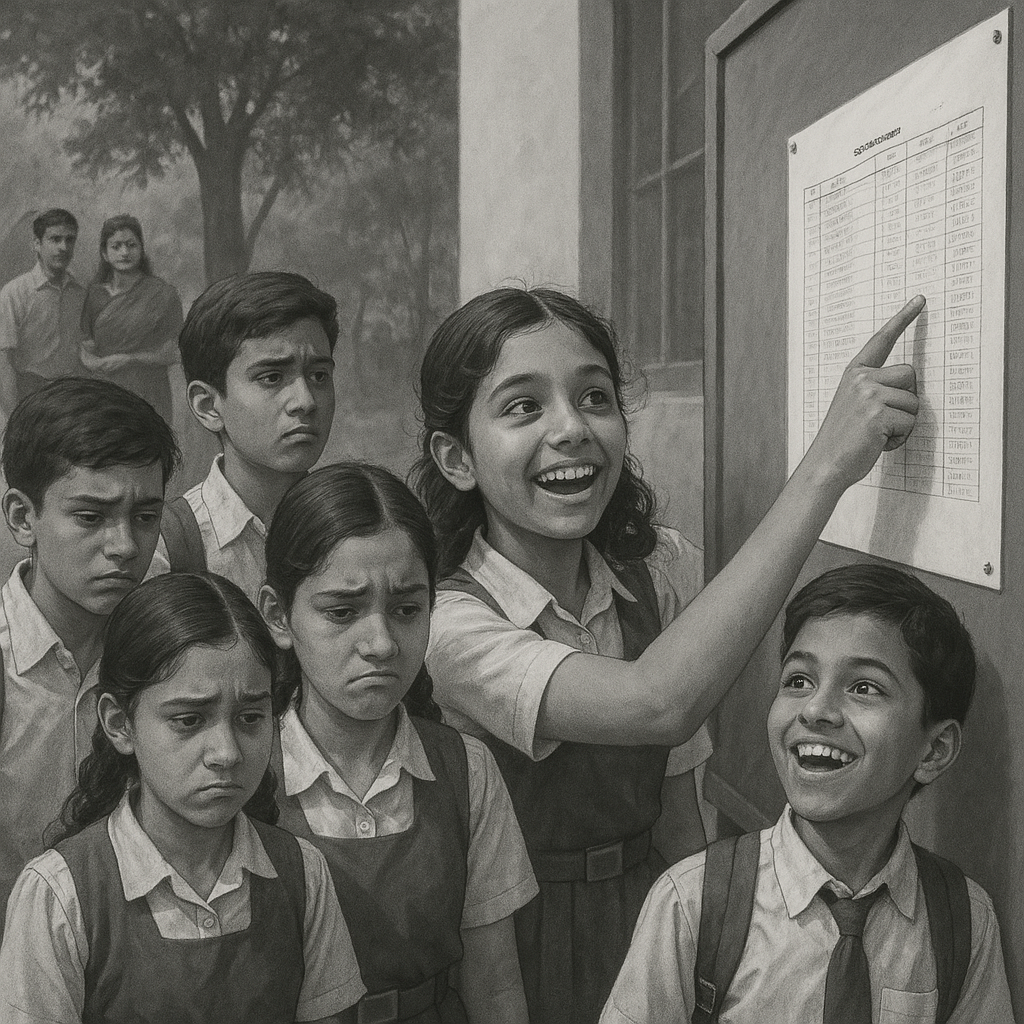
When students choose a stream for Grade 11, they usually also commit to one or more professional tracks they will prepare for and get into.
Here are a few popular professional tracks:
- Engineering: if students take the PCM (Physics, Chemistry, Mathematics) combination, they are expected to pursue an engineering track. This means they join a race where more than 11 lac (1.1 Million) students try to secure seats out of about 60K (60 thousand) high-quality engineering seats (IIT, NIT, IIIT put together). About 4.5% success rate.
- Medicine: If they instead take PCB (Physics, Chemistry, Biology), they are expected to pursue the medicine track where more than 20 lac (2 Million) students try to secure seats out of about 50K (50 thousand) government college seats. Approximately 2.5% success rate.
- Integrated Law: Students can pursue a professional law track independent of their stream by appearing in the CLAT exam. 60K students appear for about 4K seats. Almost 6.5% success rate.
- Integrated MBA: Any student can appear for an integrated course for an MBA, which gives a career track (usually called IPM). About 20K students apply for 600 seats. That amounts to 3% success rate.
- CA: About 75K students appear, 5-6% pass and become eligible for CA Final (after articleship).
- Hotel Management: It has lost its charm over the past decade. Close to 13K students appear for about 13K seats. Almost 100% success rate!
As can be seen, except hotel management, each of these tracks admits just 5-6% of those who appear. Anyone who understands probability and statistics even a little bit should think a lot before playing a game with such poor odds.
Both medicine and engineering streams offer a way for students to improve their odds of getting a seat if they can pay extra (more on this below).
Engineering and Medicine are considered the best professional tracks by far. Notwithstanding the low success rate, students are frequently forced (usually by their parents and peer groups) to take the science stream to be eligible to try for these, even though the success rate is so low.
These are all professional courses. The majority of students end up pursuing a non-professional course – a BA, BSc. or BCom, or related degrees (BBA, for ex.) and then try to get into one of the professional courses after that (MBA, LLB, BEd, MTech, etc.) with similar challenges and similar odds (a topic for another time).
Unfortunately, students and parents are driven more by emotions than data when making these decisions.
Medical Science Students
In Medicine, the cost of improving your odds ranges between 5 and 25 lac rupees annually. There are about 50K more seats that are offered by private universities. If you can afford it, you can take one of these seats. The reason there are only 50K such seats has to do with regulatory and compliance requirements, which make it hard to increase seats quickly.
Engineering Science Students
In Engineering, such extra seats can be had at a much lower price of 5 to 25 lac for the entire course. These are also offered by private institutes. However, unlike medicine, there is a huge number of such seats available. Almost a million students graduate every year (MoE-AISHE 2021-22 report). This means that there is always an engineering seat available if you want it.
So, at first glance, this seems like a great opportunity if you target an engineering degree (which means you study Mathematics as a science student). This is the trap most science students (and their parents fall into).
However, there is a big catch, as I found during my research.
IT is the biggest employer of all types of engineers for last several decades and continues to be so. However, it absorbs about 200K engineers every year on an average(Meity). This means that only about 20% of the yearly graduates have a chance to get a job. In addition, most of these seats are at institutions that offer very low-quality education. Only about 66% of the graduates are employable (India Skills Report – 2024), while less than 10% of such graduates are employable in product companies (Aspiring Minds 2016).
All this means that more than 50% (500K) engineering students every year go jobless, and a large portion of them do not have any engineering skills (so very little chance of them getting a job in future as well).
Unfortunately, this grim reality is not understood by the parents and students.
There does not seem to be an intent from the government to share this data transparently. Of course, the institutes themselves engage in information hiding and active misinformation to ensure a good impression of the domain and their own institute. Engineering continues to be celebrated and used as a sure-shot path to a stable career.
Many students who go down this path after 12 are walking towards a career nightmare (no job and no skill), and they are not even aware of this.
Commerce, Humanities and Social Science Students
Usually, these streams are chosen by those who get less marks and do not get to choose science stream. Or they don’t like science and math and have been able to convince their parents to let them take up a non-science stream. The prevalent notion is that a non-science stream doesn’t offer a professional degree path. This is not true – options like Integrated Law, Integrated MBA, and Hotel Management, as well as some other professional degrees like those in media, digital marketing, advertising are available to be pursued. However, these numbers are nowhere as big as those touted in engineering (which as we have seen above is fake and illusive).
Strategies to be successful beyond Class 12
We have been talking about degrees of various types in this article. One of the challenges that the students and parents face is that they think acquiring degree is the most important pursuit. However, given the dilution of degrees over the past few years, this is no longer true.
The need of the hour is the pursuit of skills. Degrees used to be a proxy for skills. But with the dilution, students need to pursue skills separately. They can’t rely on their degree to provide them skills. One of the reasons we have such a high number of unemployable engineers is because the engineering degree rarely teaches the skills they should – and students are blissfully ignorant of it during their college years.
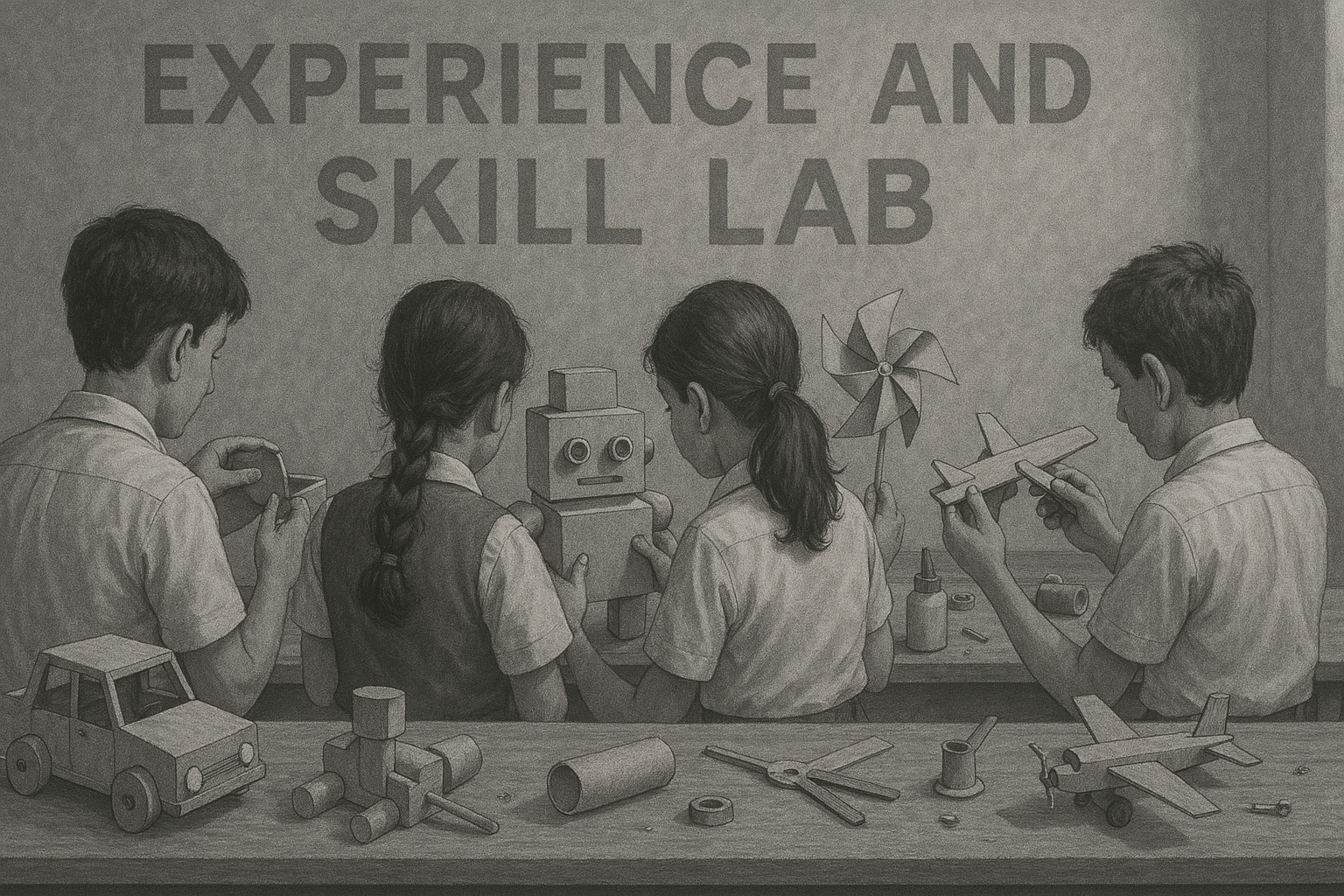
Skill acquisitions need to start after 10th grade (if not before). These can be:
- Soft skills: verbal and written communication, planning and organizing, time management, etc.
- Digital skills: MS Office skills, AI skills, digital design (Canva), website development, presentation, etc.
- Life skills: financial literacy, cooking, baking, cleaning, managing within a budget, washing clothes.
- Interests and passion: singing, playing instruments, drama and dance, teaching, blogging, caring (elders and kids), etc.
- Hands-on physical skills: carpentry, electrical, crafts, quilling, knitting,
Important thing is to pursue skill acquisition and practice them to become good at them. Many of these skills take time to build and perfect, and an early start makes you stand out when you look for a job. For example, being able to write well is a superpower that will make you stand out irrespective of the job role. However, it takes time, and if you haven’t practiced it enough in school and college, it is very hard to get good at it. In fact, most skills worth having will take time, so starting early is always a good idea.
There is another reason for starting early.
We are heading towards an AI-centric world where the key to success is going to be the ability to learn every day because we won’t be able to predict what jobs we do and what skills are required. Students of today need to develop their skill-acquisition and experience-gathering muscle, because that is going to be required all the time and will be the difference between a good and a great career. Starting early gives you a better chance to succeed in future.
Career/Life Advice
It is a good idea to select a stream that aligns with what you like (and avoids what you don’t like). If you have clarity on what you like, you should convince your parents and go for it. However, it is possible that you don’t have that clarity. This is perfectly fine too. Pick a stream based on other criteria, as long as it is your decision or you have been a part of it and believe it is the best choice under the circumstances. Given the current scenario in India, Science with Maths keeps the most number of doors open.
Whatever stream you choose, ensure that you identify a bouquet of skills that you want to acquire during the two years of school. Spend enough time to become good at most of these skills and you would have given the perfect boost to your career!